Ingredients
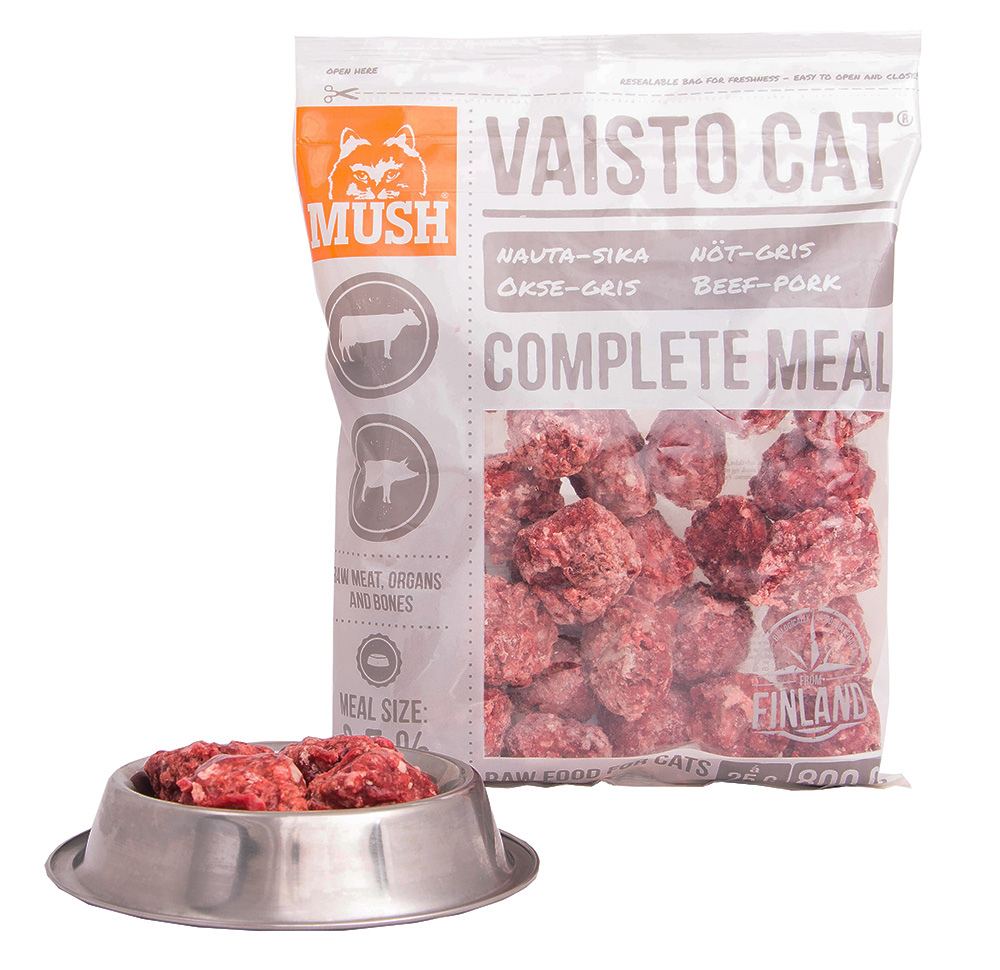
Beef 56% (meat, heart, lung, liver, cartilage, blood), pork 42% (heart, meat, bone, kidney, cartilage), cold-pressed sunflower oil, seaweed.
Nutrients / 100g
Energy (kj/kcal): 657/157
Raw Protein: 17
Raw Fat: 9.7
Calcium: 0.6
Phosphorus: 0.4
Moisture: 70.7
Crude Ash: 2.0
Fiber: 0.2
The benefits of a raw cat food diet
The Benefits of a Raw Cat Food Diet
- Healthy skin and coat – Many cats are allergic to grains, which can lead to pathologic skin conditions. A raw natural diet provides allergy relief, reduction and/or eradication.
- Cleaner, whiter and stronger teeth – Many dry foods leave a starchy coating on teeth, which promotes plaque. Feeding a raw diet maintains healthier teeth and gums as well as fresher breath.
- Stools- Harder, smaller, less smelly stools that are easier to scoop up. Less smelly farts.
- Decreased litter box odor – Many pet foods include protein that is indigestible for cats, which leads to an undesirable odor at the litter box.
- Natural weight control – Cats are healthiest on a high protein, low carbohydrate diet.
- A stronger immune system, more energy and stamina – Cat’s digestive systems are designed to ingest raw meat and are healthiest eating what Nature intended.
Some Changes to Expect:
- After a full transition to a raw diet, cats will typically drink less water. In the wild they get most of their water from their prey. A raw meat diet naturally contains more moisture than dry or canned food, so your cat may be less thirsty, yet be getting plenty of water.
- There will likely be a change in the size, odour, and color of the cat’s faeces. They will stink less! They may also be somewhat harder and dryer and be colored shades of dark and light brown. Much of the crude protein and crude fiber in most commercial dry and canned cat foods is not digestible and hence contributes to a higher stool volume. Along with the assurance of knowing that all the food your beloved cat is ingesting is actually being digested, the less stinky poops are certainly a nice bonus!
- Overweight Cats tend to lose weight. However, weight loss must be closely monitored. Rapid weight loss can lead to serious health problems. Make sure you transition your cat to a raw diet gradually and seek professional advice, especially when transitioning a cat with chronic health issues.
- Lethargic Cats begin feeling more energised, start to play more and may even exhibit hunting behaviour. Cats are healthiest when fed a high protein, low carbohydrate diet. When they aren’t experiencing the metabolic highs and lows associated with high carbohydrate intake from grains, typically found in kibble, they will use protein as their energy source, just as they were designed by nature to do. This tends to provide more sustained energy throughout the day and reduces the need to “graze”.
- Allergies tend to clear up, which may be a result of less exposure to potential food allergens. Many cats have allergies to grains that can range from very mild to severe. These allergies can manifest on the skin, can affect digestion, and also contribute to runny eyes and nose. The reduction in allergic symptoms may be a result of not only a reduced exposure to allergens from a higher food quality, but also from a stronger immune system. The more nutritious the food, the stronger the immune system will be.
- Fur becomes incredibly soft and shedding is reduced. This is typically one of the initial benefits observed after changing cats to a raw diet and is a direct result of better nutrition. The humans in the household also stand to gain when switching cats to raw as they are less likely to suffer allergic reactions to cats due to the reduction of dander.
Daily Feeding Guide Raw Food (grams)
A frozen complete and balanced raw food for kittens, adult and senior cats.
Always ensure there is a bowl of fresh water available for your pet and supervise when feeding.
If you are new to raw feeding, you may be rather pleasantly surprised as your pet’s health improves while they transition to a healthier diet. It’s essential to feed your animals the appropriate daily amounts based on their unique characteristics and lifestyle. Animals on a raw food diet tend to require less food than their kibble/grain-based diet fed counterparts. This is because raw food has so much more nutritional value. There are a few key factors that will influence the recommended daily feeding amounts for each pet, such as age, breed, activity level, spay/neuter status and weight goals.
We recommend using the amounts shown below (grams/ nuggets per day) as a starting off point and adjust accordingly depending on your individual cat’s level of activity and weight goals.
Cat’s Weight = Grams / Nuggets per day
- 2 kg = 75 g/3 Nuggets
- 3 kg = 100 g/4 Nuggets
- 4 kg = 125 g/5 Nuggets
- 5 kg = 150 g/6 Nuggets
- 6 kg = 175 g/7 Nuggets
We also advise feeding adult cats twice daily so the estimated daily portion should be divided by two. Kittens should be fed smaller portions, multiple times a day so please factor that in when determining each meal size.
Tips & Recommendations
Feeding Tips
- Any change to a cat’s diet can cause digestive upset, so close monitoring through the transition period is essential.
- Go slow, use caution, and consult an experienced raw feeding expert or a holistic veterinarian if you are experiencing any problems.
- Feed on a flat dish. Cats sometimes are bothered when their whiskers touch the sides of the bowl.
- Adult cats should be fed twice daily.
- Younger cats may eat larger meals, more often.
- Weaned kittens should be fed multiple small meals throughout the day.
- It is best to serve food at room temperature. Do not cook.
Safe Handling
Always handle raw cat food the same as any other raw meat product. Clean surfaces immediately after use and never leave small children unattended around raw meat. Furthermore, after offering raw food to your cat, do not leave the food out for more than 30 minutes and discard all left-overs. For detailed tips on how to handle raw meat visit our FAQ’s section.
Recommendations for Transitioning Cats to Raw Food Diets
There are various methods for transitioning cats to a raw-meat diet. A cat’s natural instinct is to ‘fixate’ on food, which helps kittens to learn what is food and to recognize it when they see and smell it. They also do not like change, whether it is the food in their bowl or their living environment. What is sometimes referred to as a cat being ‘finicky’ is really a manifestation of this natural tendency. Some cats require a gradual transition to a raw diet, while others take to it immediately. Use the method that seems to fit your cat’s personality best. When changing to a raw meat diet, we recommend eventually stopping all feeding of dry food – completely.
- Cats Currently on a Kibble Diet Only
Begin by offering a small morsel of raw food. If they taste it at all, begin offering small amounts as a treat throughout the day and do not offer kibble outside of mealtimes at all so it is not lying around for them to get full on. Gradually move toward one set meal of raw food in the morning and one of dry food in the evening. Slowly increase the raw portion and decrease the amount of kibble you feed until your cat is completely transitioned.
Another option is to transition to a high quality canned wet food, then transition to the raw diet from the canned food.
- Cats Currently on Wet Food Only
Begin a feeding schedule of twice per day. Place a small morsel of the raw food next to your cat’s regular food or mix it in with their current wet food. Gradually begin increasing the ratio of raw to canned until the transition is complete.
- Cats Currently Eating both Dry and Wet Food
Slowly move to a wet food feeding schedule twice daily and reduce the amount of kibble left out during the day for grazing. Add small morsels of the raw diet to the canned wet food or offer as a separate treat at meal times. Gradually begin offering kibble only during meals, and eventually remove from your cat’s diet completely.
For cats that have trouble recognizing a raw diet as food and are completely ignoring it all together, here is something to try:
Place a tablespoon of raw food next to their regular food. This will get your cat to begin associating raw food with their meal time. It may be a slow process, with the cat only sniffing it at first. Gradually, they will begin to adjust to the look, feel and smell of raw food and will be more inclined to taste it, with the transition eventually taking place.
Patience is key here, but once your cat has crossed over to the land of health and vitality it will all be well worth the efforts!
The last trick up our sleeve can be used for any and all situations, but it works wonders for picky eaters. Regardless of whether you fall under the category of kibble feeders or whether you give your cat a mix of wet and dry and are trying to transition to raw- Green Beef Tripe is here to help you!
We are strong advocates of feeding green beef tripe to pets regularly, in general, but when it comes to transitioning animals especially finicky cats, tripe is our go to food. Despite it living up to its reputation of being incredibly stinky, raw green beef tripe is not only packed with digestive enzymes and hence super healthy, but it is also considered an absolute delicacy by all cats and dogs!
Mix it in with the rest of your raw food and it will encourage your cat to try its new, healthier diet! Go on, give it a try!
Storage & Expiry Date
Storage:
- Keep frozen at below –18 °C until ready to use. Thaw in a sealed container for two hours, in the fridge overnight or in warm water. Once defrosted please serve the product within 24 hours.
- Normal hygiene rules apply for preparing and handling fresh/raw ingredients such as keeping raw meat separate from other foods. Washing working utensils, hands, and any other items that touch or contact raw meat or poultry.
- Refrigerate leftovers immediately or discard. After opening use within 48 hours.
Expiry Date: 12 months after production date